
SEO and content marketing: a winning combination
How to build both visibility and trust with a content cluster around your services.

 Google Partner
 Shopify Partner5.0 Google ReviewsSinds 2005 in marketingNext level online succesSEO uitbestedenAI-vindbaarheidWebdesign & webshopsLooptijd 6 of 12 maandenEén vast aanspreekpuntGoogle PartnerShopify Partner5.0 Google ReviewsSinds 2005 in marketingNext level online succesSEO uitbestedenAI-vindbaarheidWebdesign & webshopsLooptijd 6 of 12 maandenEén vast aanspreekpunt
Kort antwoord
SEO and content marketing: a winning combination
Content marketing and SEO work together when you think in clusters: your service page is the hub, and the supporting articles answer specific sub-questions and link internally back to that hub. That is how you build visibility and trust around the same topic.
- One hub per topic, multiple articles around it; each article links back to the hub.
- Each article answers one search query; two articles covering the same question weaken each other.
- Internal links with descriptive anchor text help determine which page Google considers the most important.
- A cluster only works if the hub itself also genuinely provides an answer, pricing, and a clear next step.
Ook interessant

Content without SEO won't get found. SEO without content has nothing to rank. The combination works best when you think in clusters.
Work with hub-and-spoke pages
Your service page is the hub. Around it, you write articles that answer specific sub-questions and link back internally to that hub. That is how you build topical authority.

Ik hoop dat je dit artikel met plezier leest. Heb je hulp nodig bij SEO, GEO, UX-design, CRO, webdesign of SaaS-software? Klik dan hier en bekijk mijn diensten.
Geschreven door: Lubna Ouarghi
Step by step: building a cluster
Choose the service you most want to bring in clients with. Write down the questions clients ask before they purchase that service — those are your articles.
Publish one article per question with a concise answer at the top, an explanation, and a link to the hub with descriptive anchor text. Link from the hub to the articles as well. Add one piece each month instead of ten at once; that way you maintain quality.
The mistakes I see most often
Blogging without any connection: ten standalone pieces on ten different topics, without a hub and without internal links. Articles that end without a next step, leaving the reader with nowhere to go.
And creating content for keywords that no one with buying intent ever searches for. That gets you visitors, but no enquiries.
Hub and spokes in practice
| Role | Example | Objective |
|---|---|---|
| Hub | Outsource SEO | Enquiry or appointment |
| Spoke | How long does SEO take? | Trust and click-through to the hub |
| Spoke | Choosing keywords | Demonstrating knowledge on a sub-question |
| Spoke | Google SEO guidelines | Proof that you work according to the rules |
In brief
- 01
Think in clusters
One hub, multiple articles, reciprocal links.
- 02
One question per article
This prevents your own pages from competing with each other.
- 03
Always a next step
Every article ends with a service or a tool.
Frequently asked questions
How often should I publish?
Better one good piece a month than four rushed ones. Consistency helps, but quality determines whether you get cited.
How many articles does a cluster need?
Start with five to eight sub-questions around a single service. Expand based on what Search Console shows.
Should I update old articles?
Yes, that often delivers better results than writing from scratch: add the answer at the top, update figures, and fix internal links.
Does content also help with AI answers?
Absolutely. A short, factual answer with a source and date is exactly what AI assistants pick up.
Bronnen en controle
Laatst bijgewerkt en gecontroleerd: September 2026 — door Lubna Ouarghi
This explanation is based on the official documentation below and on my own work in client projects.
- Google Search Central — SEO Starter Guide — what SEO is and where to start
- Google Search Central — Do you need an SEO specialist? — what a specialist does and what to look out for
- Google Search Essentials — the rules your site must comply with
Need help with this topic?
More articles
CRO · 8 min
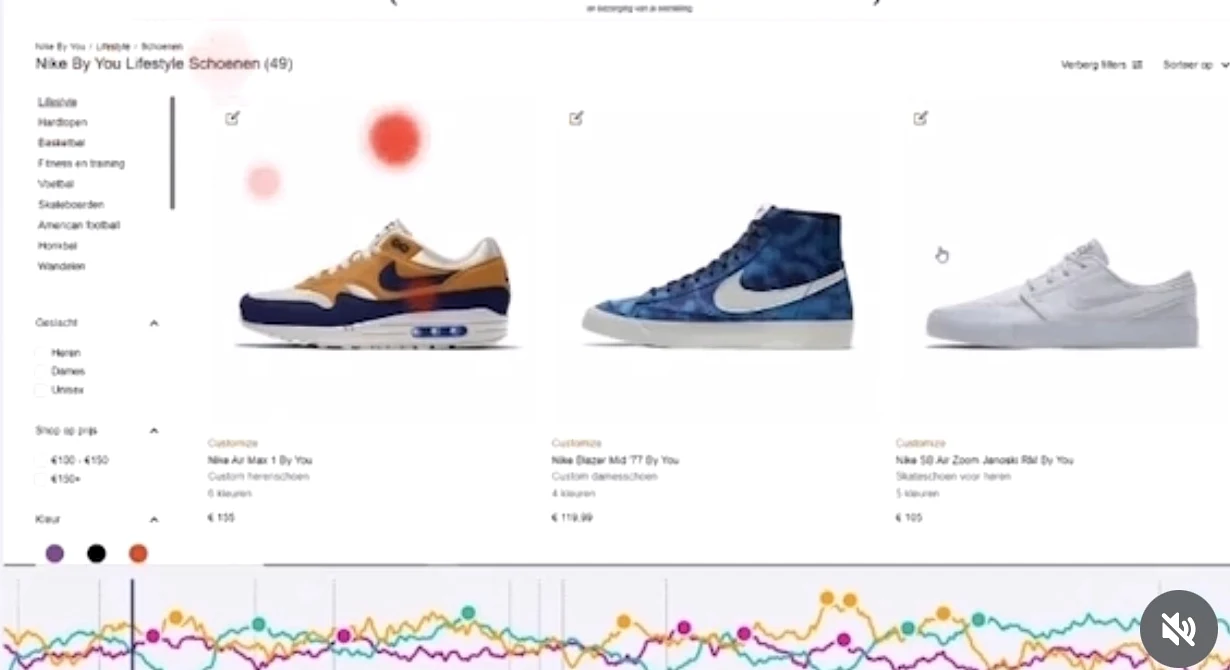
Neuromarketing op je website: waarom mensen wél of niet op je knop klikken
Hoe keuzegedrag echt werkt en welke aanpassingen in tekst, kleur en plaatsing ervoor zorgen dat bezoekers doorklikken in plaats van afhaken.

SEO · 7 min
SEO-richtlijnen van Google: waar je je echt aan moet houden
Wat Google zelf van je website vraagt, welke veelgehoorde SEO-regels onzin zijn en hoe je binnen de richtlijnen toch snel resultaat boekt.

SEO · 8 min
Zoekwoorden kiezen: zo vind je de woorden waar klanten écht op zoeken
Van zoekintentie tot zoekvolume: hoe je zoekwoorden kiest die klanten opleveren in plaats van bezoekers die niets doen.

SEO · 7 min
SEO voor webshops: meer zichtbaarheid, meer omzet
Hoe je met categoriepagina's, productcontent en techniek structureel meer organische omzet uit je webshop haalt.

SEO · 6 min
Wat is SEO en waarom is het belangrijk voor jouw online groei?
Een heldere uitleg van zoekmachineoptimalisatie: de drie pijlers, wat het oplevert en hoe lang het duurt.
SEO · 8 min
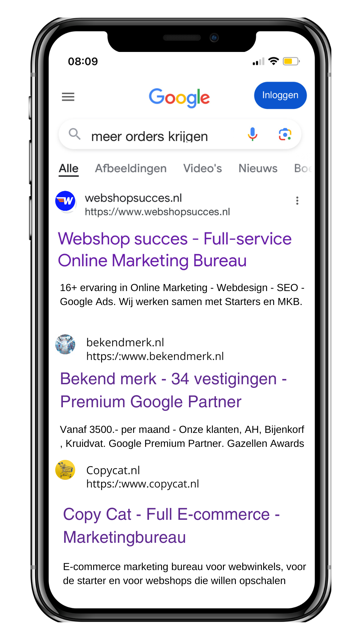
Hoe krijg je kwalitatieve backlinks (en wat zijn backlinks)?
Wat backlinks zijn, waarom kwaliteit belangrijker is dan aantal en welke linkbuilding-methodes in Nederland werken.
Ready to grow?
Request the free growth scan and receive a personalised analysis.
Liever direct sparren?
Vul het formulier in of bel mij direct. Je spreekt altijd een specialist, geen accountmanager die de vraag doorzet.
- Eén vaste contactpersoon
- Maandelijkse rapportage met toelichting
- Heldere looptijd: 6 of 12 maanden
- 20+ jaar ervaring in SEO en e-commerce