
How much revenue does the average online shop make, and how do you make it profitable?
Realistic revenue and margin figures for Dutch online shops, plus the levers you can pull.

 Google Partner
 Shopify Partner5.0 Google ReviewsSinds 2005 in marketingNext level online succesSEO uitbestedenAI-vindbaarheidWebdesign & webshopsLooptijd 6 of 12 maandenEén vast aanspreekpuntGoogle PartnerShopify Partner5.0 Google ReviewsSinds 2005 in marketingNext level online succesSEO uitbestedenAI-vindbaarheidWebdesign & webshopsLooptijd 6 of 12 maandenEén vast aanspreekpunt
Kort antwoord
How much revenue does the average online shop make, and how do you make it profitable?
There is no reliable 'average' online store revenue: the difference between industries is simply too big. What actually matters is the maths behind your profit — average order value, margin, acquisition costs, and repeat purchases. Pull those levers, and profit grows alongside revenue.
- Profit = (order value × margin) − acquisition costs − fixed costs; revenue alone tells you nothing.
- Bundles, tiered pricing, and cross-sells increase average order value without extra ad spend.
- Relying on ads alone means acquisition costs climb right alongside revenue.
- Retention is usually the cheapest form of growth: an existing customer doesn't cost an extra click.
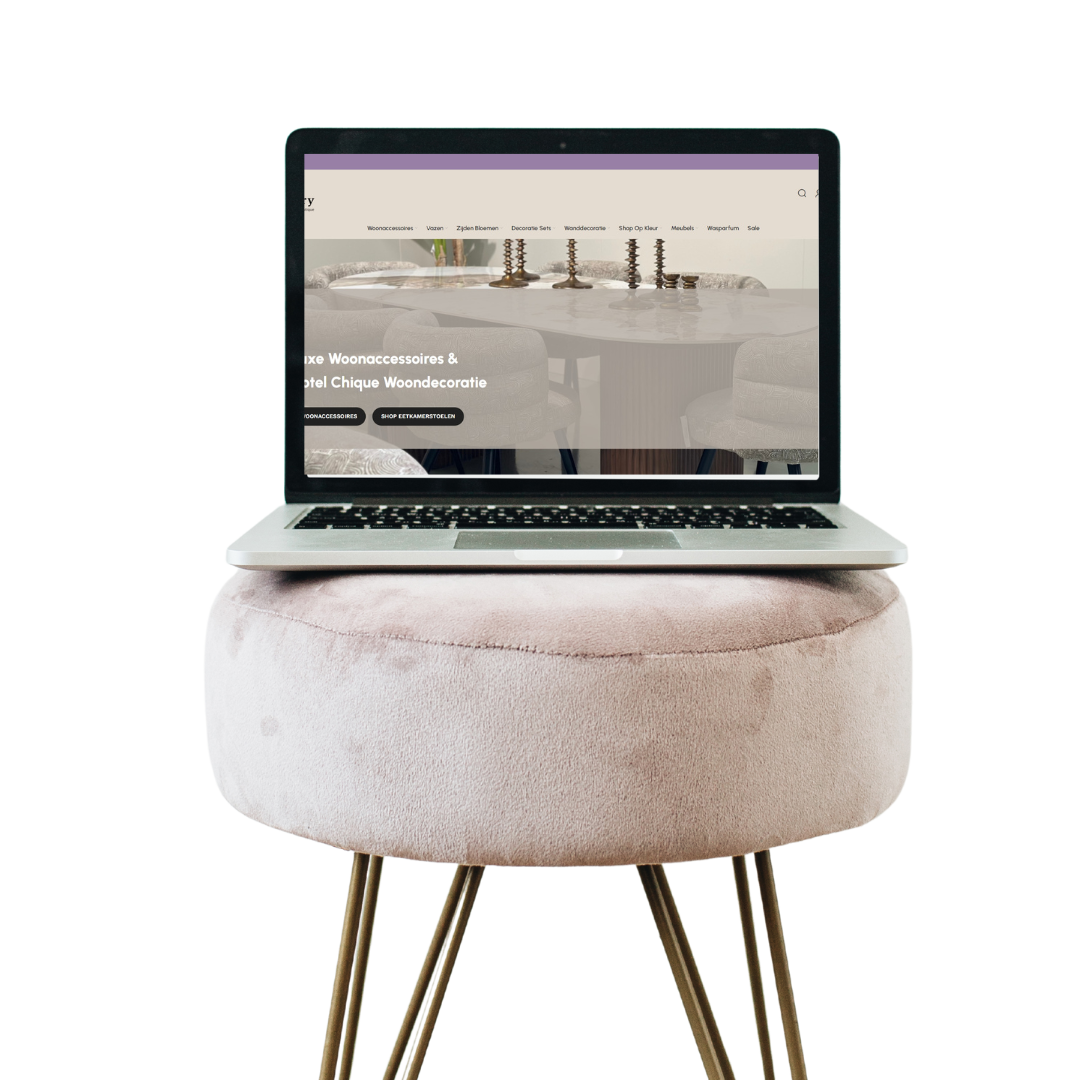
Revenue means very little without margin. Most online shops that come to us are growing in revenue, but not in profit. That is almost always down to the same three reasons.
1. Average order value too low
Bundles, tiered discounts and smart cross-sells increase order value without additional ad spend.
2. Customer acquisition too expensive
If you rely solely on ads, your CAC scales alongside your revenue. Organic traffic and email ensure a lower average acquisition cost.
3. No repeat purchases
Retention is the cheapest form of growth there is. A simple post-purchase flow almost always pays for itself.

Ik hoop dat je dit artikel met plezier leest. Heb je hulp nodig bij SEO, GEO, UX-design, CRO, webdesign of SaaS-software? Klik dan hier en bekijk mijn diensten.
Geschreven door: Lubna Ouarghi
Step by step: getting your own numbers in order
Compare four figures from the past twelve months: average order value, gross margin per order, marketing costs per new customer, and the percentage of returning customers. That will show you where you're losing money.
Then, pick one lever per quarter. For example, increase order value first using bundles, and only then tackle acquisition by building organic traffic and email. Doing two things at once makes it impossible to measure what actually worked.
The mistakes I see most often
Scaling with ads when your margin can't support it. Failing to factor shipping and returns into the margin per order. And using discounts as a default strategy, which means customers never believe the full price again.
Another common mistake: zero post-purchase emails, even though that is precisely where the cheapest revenue lies.
Four levers and what to do about them
| Lever | What to do | Impact |
|---|---|---|
| Order value | Bundles, tiered pricing, cross-selling | More revenue per existing click |
| Margin | Factoring in shipping and return costs | Profit per order increases |
| Acquisition costs | Building organic traffic and email | Less dependent on ads |
| Repeat purchase | Post-purchase flow, service | Revenue without extra costs |
In brief
- 01
Revenue is not profit
Calculate per order, including shipping and returns.
- 02
One lever per quarter
Otherwise, you won't know what made the difference.
- 03
Organic lowers your CAC
Traffic without click costs reduces your acquisition costs.
Frequently asked questions
What is a healthy margin for an online shop?
That varies considerably by industry. What matters more is whether your margin per order can cover both acquisition costs and fixed costs.
How many visitors do I need?
Work backwards from your goal: target revenue divided by order value gives you the number of orders, and your conversion rate tells you how many visitors you need.
Should I advertise first or do SEO first?
Advertising quickly provides data on what sells; SEO then lowers your cost per customer. In practice, you start with both, in different proportions.
How much does a new or improved online shop cost?
The web design page lists the packages and pricing, so you can gauge it upfront.
Bronnen en controle
Laatst bijgewerkt en gecontroleerd: September 2026 — door Lubna Ouarghi
This explanation is based on the official documentation below and on my own work in client projects.
- Google Search Central — E-commerce and Search — how Google reads e-commerce pages
- Google — Structured data for products — price, stock, and reviews machine-readable
- Google — Consolidating canonical URLs — managing filter and duplicate URLs
More articles
CRO · 8 min
Neuromarketing op je website: waarom mensen wél of niet op je knop klikken
Hoe keuzegedrag echt werkt en welke aanpassingen in tekst, kleur en plaatsing ervoor zorgen dat bezoekers doorklikken in plaats van afhaken.

SEO · 7 min
SEO-richtlijnen van Google: waar je je echt aan moet houden
Wat Google zelf van je website vraagt, welke veelgehoorde SEO-regels onzin zijn en hoe je binnen de richtlijnen toch snel resultaat boekt.

SEO · 8 min
Zoekwoorden kiezen: zo vind je de woorden waar klanten écht op zoeken
Van zoekintentie tot zoekvolume: hoe je zoekwoorden kiest die klanten opleveren in plaats van bezoekers die niets doen.
SEO · 7 min
SEO voor webshops: meer zichtbaarheid, meer omzet
Hoe je met categoriepagina's, productcontent en techniek structureel meer organische omzet uit je webshop haalt.
SEO · 6 min
Wat is SEO en waarom is het belangrijk voor jouw online groei?
Een heldere uitleg van zoekmachineoptimalisatie: de drie pijlers, wat het oplevert en hoe lang het duurt.
SEO · 8 min
Hoe krijg je kwalitatieve backlinks (en wat zijn backlinks)?
Wat backlinks zijn, waarom kwaliteit belangrijker is dan aantal en welke linkbuilding-methodes in Nederland werken.
Ready to grow?
Request the free growth scan and receive a personalised analysis.
Liever direct sparren?
Vul het formulier in of bel ons direct. Je spreekt altijd een specialist, geen accountmanager die de vraag doorzet.
- Eén vaste contactpersoon
- Maandelijkse rapportage met toelichting
- Heldere looptijd: 6 of 12 maanden
- 20+ jaar ervaring in SEO en e-commerce